

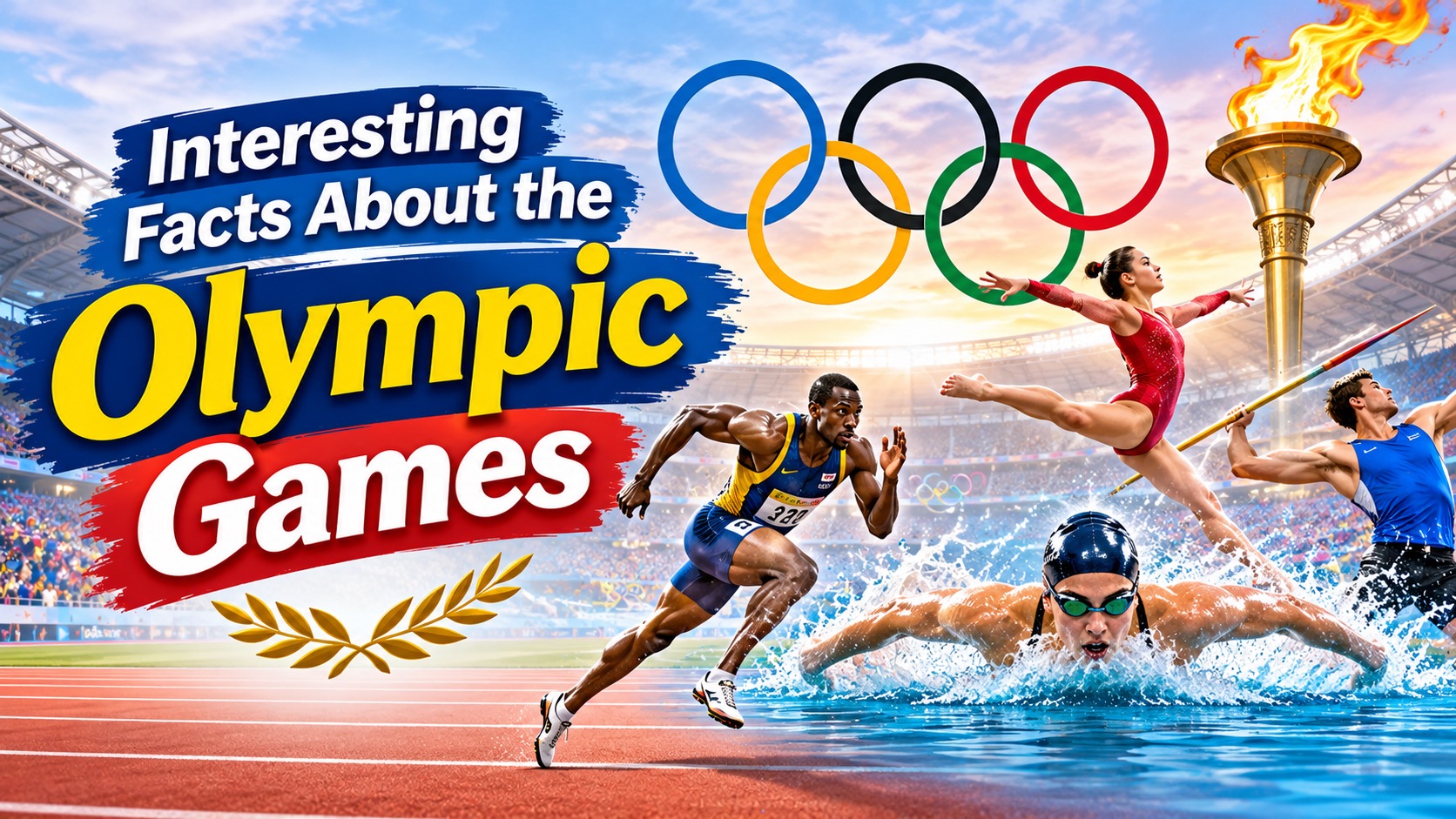
Did you know that the first modern Olympic Games had only 14 participating countries? Or that Olympic gold medals are mostly made of silver?
The Olympic Games have fascinated the world for thousands of years. What began as a religious and athletic festival in ancient Greece has evolved into one of the largest international sporting celebrations.
Here are 25 incredible facts about the Olympic Games that every sports enthusiast should know.
1. The Ancient Olympics Began in Greece
The first recorded ancient Olympic Games took place in Olympia, Greece, in 776 BC. They were held in honour of Zeus, the king of the Greek gods.
The ancient Games continued for more than a thousand years before eventually disappearing.
2. The First Modern Olympics Were Held in 1896
The modern Olympic Games began in Athens, Greece, in 1896.
Approximately 241 athletes from 14 countries participated, according to commonly cited Olympic historical records. All the competitors were men.
3. Olympic Gold Medals Are Mostly Silver
Surprisingly, Olympic gold medals are not made of solid gold.
Modern Olympic gold medals are primarily made of silver and coated with at least six grams of pure gold.
Solid gold medals were last awarded at the 1912 Summer Olympics.
4. The Five Olympic Rings Represent Five Continents
The famous Olympic symbol consists of five interconnected rings in blue, yellow, black, green, and red.
The rings represent the union of five inhabited continents traditionally recognised by the Olympic movement: Africa, the Americas, Asia, Europe, and Oceania.
The individual colours do not officially correspond to specific continents.
5. The Olympic Flame Is Lit in Greece
Before each Olympic Games, the Olympic flame is traditionally lit in Olympia, Greece, using sunlight concentrated by a parabolic mirror.
The flame is then carried toward the host city through a torch relay.
This tradition symbolises the connection between the ancient and modern Olympic Games.
6. Women First Competed in the Modern Olympics in 1900
Women were not allowed to compete in the first modern Olympics in 1896.
Female athletes first participated in the 1900 Paris Olympics, competing in sports such as tennis and golf.
The Paris 2024 Olympics became the first Summer Games to achieve equal allocation of athlete quota places for men and women.
7. The First Winter Olympics Took Place in 1924
The first Winter Olympic Games were held in Chamonix, France, in 1924.
They featured winter sports including figure skating, ice hockey, skiing, and bobsleigh.
Today, the Winter Olympics showcase some of the world’s most exciting snow and ice competitions.
8. The Olympics Were Once Held in the Same Year
Until 1992, the Summer and Winter Olympics were generally held in the same calendar year.
Beginning in 1994, the Winter Olympics moved to a schedule alternating with the Summer Games every two years.
Each edition of the Summer and Winter Olympics normally occurs every four years.
9. Michael Phelps Holds the Record for Most Olympic Gold Medals
American swimmer Michael Phelps is the most decorated Olympian in history.
He won an extraordinary 28 Olympic medals, including 23 gold medals, across five Olympic Games.
His achievements remain among the greatest in sporting history.
10. The Olympic Marathon Has an Unusual Distance
A marathon covers exactly 42.195 kilometres, or 26 miles and 385 yards.
The distance became associated with the route used at the 1908 London Olympics and was later standardised.
The event is inspired by the ancient Greek legend of a messenger running from Marathon to Athens.
11. The Olympic Motto Has Changed
The traditional Olympic motto was:
Faster, Higher, Stronger.
In 2021, the International Olympic Committee officially added the word “Together.”
The current motto is:
Faster, Higher, Stronger – Together.
It reflects the importance of unity and cooperation through sport.
12. The Olympics Were Cancelled During World Wars
The Olympic Games were cancelled three times because of the World Wars.
The cancelled Summer Games were scheduled for 1916, 1940, and 1944.
The Winter Olympics scheduled for 1940 and 1944 were also cancelled.
13. Tokyo 2020 Was Actually Held in 2021
The Tokyo Olympics were originally scheduled for 2020 but were postponed because of the COVID-19 pandemic.
They eventually took place in 2021 while retaining the official name Tokyo 2020.
It was the first time the modern Olympics had been postponed rather than cancelled.
14. The Olympic Village Is Like a Small International City
During the Olympics, athletes from many nations stay in a specially organised Olympic Village.
These facilities typically provide accommodation, dining, medical support, recreation, and transportation services.
The Olympic Village creates opportunities for athletes from different cultures to interact.
15. The First Olympic Champion of the Modern Era Was James Connolly
American athlete James Connolly became the first Olympic champion of the modern Games in 1896.
He won the triple jump competition in Athens.
His victory marked a historic moment in modern sporting history.
16. Tug of War Was Once an Olympic Sport
Believe it or not, tug of war was an official Olympic event!
It appeared at the Summer Olympics from 1900 to 1920.
Other unusual events in Olympic history include rope climbing and underwater swimming.
17. Art Competitions Were Once Part of the Olympics
Between 1912 and 1948, Olympic medals were awarded for artistic competitions.
Categories included architecture, literature, music, painting, and sculpture.
The artistic works had to be inspired by sport.
18. The Olympic Torch Relay Is a Modern Tradition
Although the Olympic flame has ancient roots, the modern torch relay was introduced at the 1936 Berlin Olympics.
Today, the relay is one of the most recognisable traditions preceding the Games.
19. The United States Has Won the Most Summer Olympic Gold Medals
The United States leads the historical Summer Olympic gold medal table.
American athletes have achieved remarkable success in athletics, swimming, gymnastics, basketball, and many other sports.
20. The Olympics Have Featured Athletes of Extraordinary Ages
Olympic history includes both teenage champions and competitors in their seventies.
Swedish shooter Oscar Swahn won an Olympic medal at age 72 at the 1920 Antwerp Games.
His achievement demonstrates that sporting excellence is not limited to younger athletes.
21. The Olympic Flag Was First Flown at the Games in 1920
The Olympic flag, featuring five coloured rings on a white background, made its Olympic Games debut at Antwerp in 1920.
The symbol was designed by Pierre de Coubertin in 1913.
It has since become one of the most recognisable symbols in the world.
22. The Olympics Have Been Hosted Across Multiple Continents
The modern Summer Olympics have been held in Europe, Asia, North America, South America, and Oceania.
Rio de Janeiro hosted the first Summer Olympics in South America in 2016.
Africa has not yet hosted the Summer Olympic Games.
23. Olympic Medals Have Unique Designs
Although Olympic medals follow certain official requirements, each host city can incorporate distinctive artistic elements.
Medal designs often celebrate the host country’s culture, history, and identity.
For Paris 2024, the medals incorporated a piece of iron from the Eiffel Tower.
24. Breaking Made Its Olympic Debut in Paris 2024
Breaking, also known as breakdancing, made its Olympic debut at the Paris 2024 Games.
Athletes competed in head-to-head battles combining athletic ability, rhythm, creativity, and technical skill.
Breaking was not included in the programme for the Los Angeles 2028 Olympics.
25. The Olympic Games Promote More Than Sporting Competition
The Olympic movement aims to promote excellence, respect, friendship, and international understanding.
Athletes from different countries compete under shared sporting rules, often inspiring millions of people around the world.
Although the Games have sometimes faced political controversy, their central sporting ideals continue to emphasise unity and fair competition.
Frequently Asked Questions About the Olympic Games
1. When did the Olympic Games begin?
The first recorded ancient Olympic Games were held in 776 BC in Olympia, Greece. The modern Olympics began in Athens in 1896.
2. Who founded the modern Olympic Games?
French educator Pierre de Coubertin played the leading role in reviving the modern Olympic Games and establishing the International Olympic Committee in 1894.
3. How many rings are on the Olympic flag?
There are five interconnected rings representing the unity of the five inhabited continents recognised in Olympic tradition.
4. Who has won the most Olympic medals?
Michael Phelps holds the record with 28 Olympic medals, including 23 gold medals.
5. Are Olympic gold medals made of real gold?
Olympic gold medals contain real gold, but they are primarily made of silver with a gold coating.
6. How often are the Olympic Games held?
The Summer and Winter Olympic Games are each normally held every four years, alternating so that an Olympic edition occurs every two years.
7. What is the Olympic motto?
The official motto is “Faster, Higher, Stronger – Together.”
Conclusion
The Olympic Games are much more than an international sporting competition. They represent thousands of years of history, extraordinary human achievements, and the ability of sport to bring people together.
From ancient Greek athletes to modern Olympic legends like Michael Phelps, the Games continue to inspire new generations.
Which Olympic fact surprised you the most? Share your favourite fact and discover more amazing stories at DoYouKnowFacts.com!