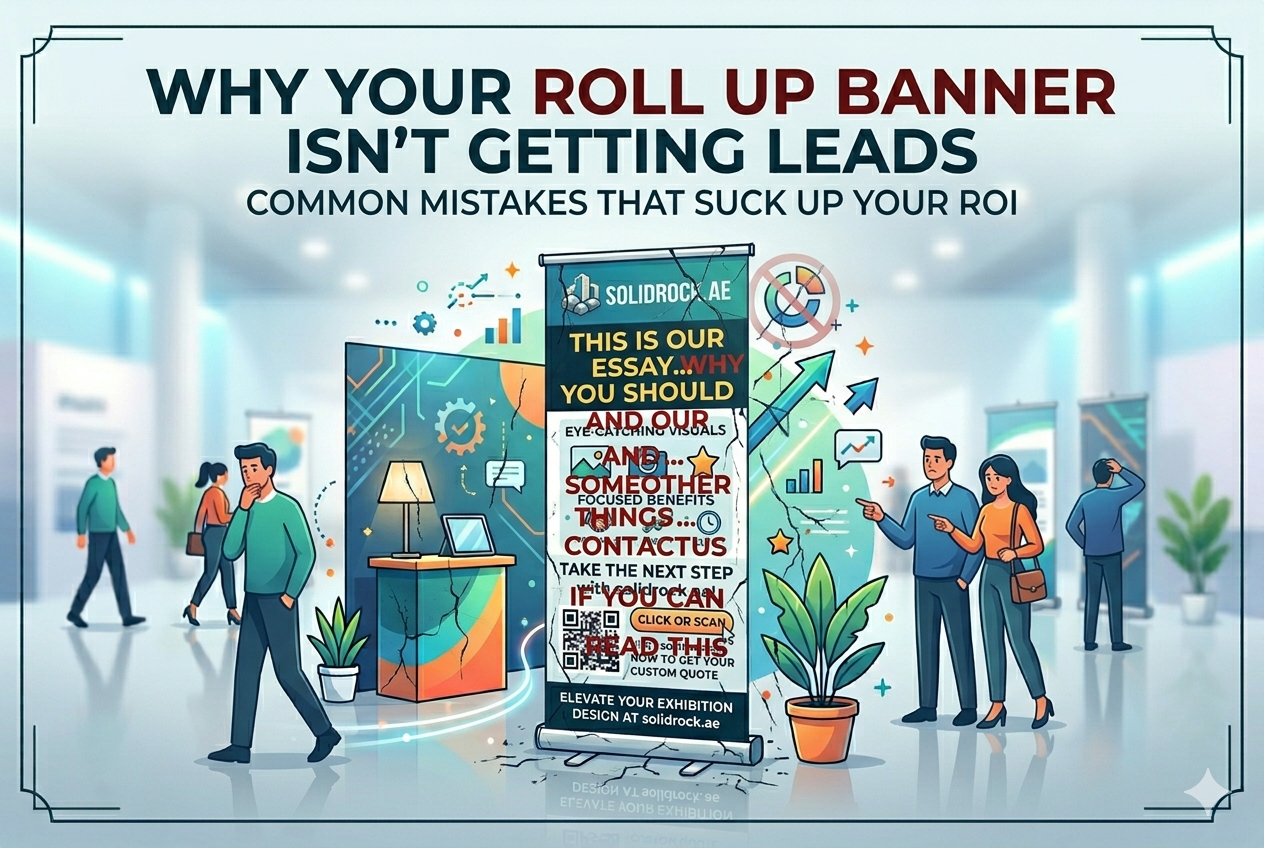

You have three seconds. That is the time you get to grab someone’s attention at a trade show or busy event. A roll up banner acts as a silent salesperson standing in your booth. If your display looks messy or lacks a clear point, you lose potential leads before you even say hello. Many brands treat these displays as an afterthought, leading to wasted space and missed sales. Understanding how to make a roll up banner that actually works is essential for turning foot traffic into tangible business results.
Why Your Current Banner Might Be Failing
Many banners fail because they try to do too much. You might see one with a paragraph of text, a dozen images, and no clear way to contact the company. When a design is cluttered, the human brain ignores it to save energy. If a person cannot read your main headline from ten feet away, you have already lost them. People at events are walking, scanning, and looking for a reason to stop. If you do not give them one immediately, they will keep moving.
Defining a Working Banner
A functional banner has one job: to bridge the gap between your brand and a potential customer. Success is defined by a clear value proposition, a strong visual hierarchy, and a direct call to action. It does not need to tell your whole life story. Instead, it must entice someone to stop, look, and take the next step.
Section 1: Strategic Planning: Before You Design Anything
Effective marketing starts long before you open a design program. When you plan how to make a roll up banner, you must start with a firm strategy. If you rush into the layout, you will end up with a pretty object that does not generate leads.
Defining Your Primary Objective
What is the one thing you want this banner to do? Do not try to accomplish three things at once. If your goal is lead capture, the design should focus on getting a name and email. If you are launching a new product, the design should highlight that item. When you pick one clear goal, every design choice becomes easier to make.
Know Your Audience and Context
The setting changes how you talk to your audience. A banner for a high-level industry conference looks different than one for a local market day. You need to know how far away people will be when they first see the banner. If they are walking past in a busy aisle, your text needs to be massive. If they are standing right in front of your booth, you can afford to add more detail.
The Core Message: Clarity Over Cleverness
The biggest mistake is trying to be too clever. People do not care about your brand as much as you do; they care about their own problems. Your banner should clearly answer: “What is in it for me?” Create a single, punchy headline that answers that question in under seven words. If you can explain your value in a short sentence, you have a winning message.
Section 2: Design Principles for Maximum Impact
Now that you have your message, you need to present it in a way the eye can process instantly. When you make a roll up banner, you are competing for attention with everything else in the room.
Mastering Visual Hierarchy
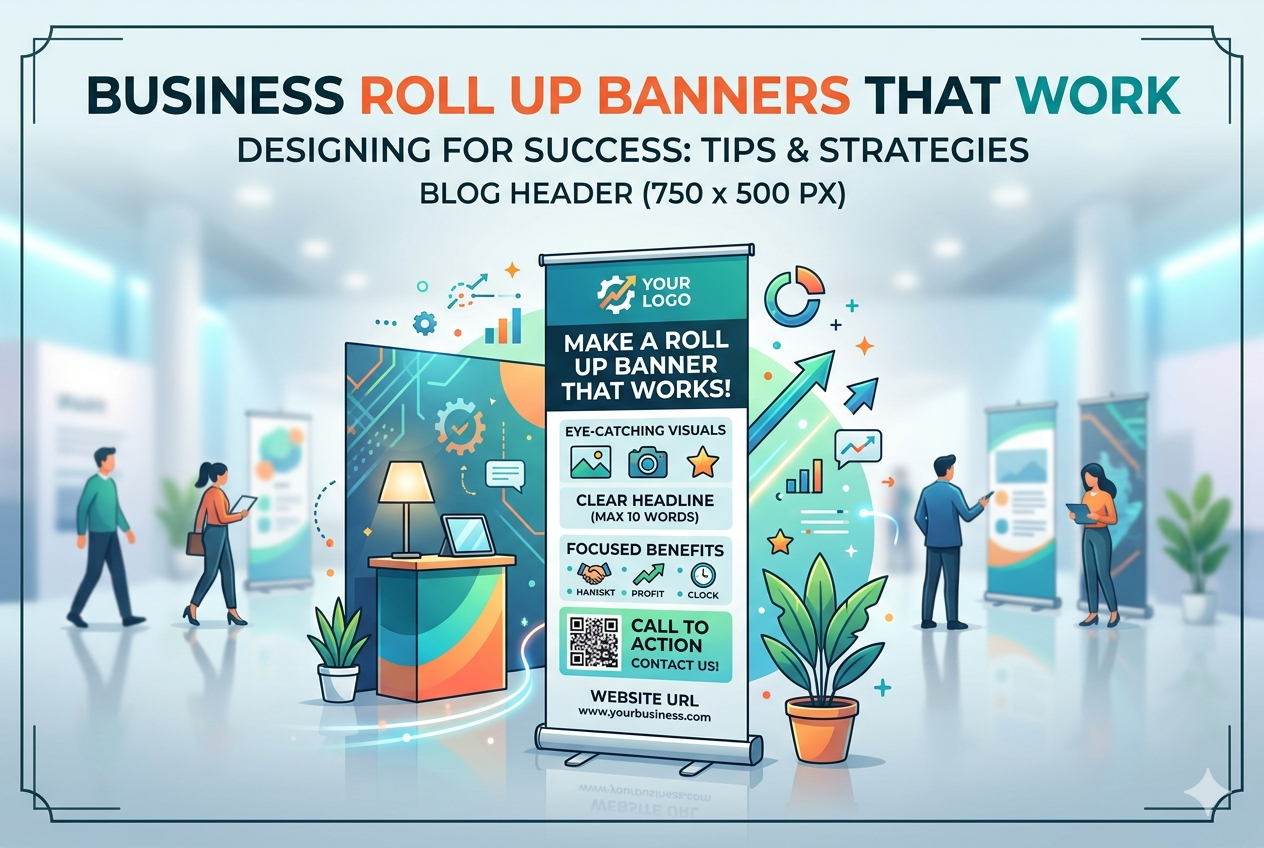
People do not read; they scan. The eye naturally moves in a Z-pattern across a display. You should place your logo at the top so people know who you are immediately. The main headline should be large and placed in the top third of the banner. Your key benefits and call to action should be placed toward the bottom, where they are still easy to see but come after the headline has hooked the reader.
Typography: Size, Contrast, and Font Choice
If people cannot read your text, they will not engage. Use large, bold fonts that contrast well with the background. A good rule is to make your main headline readable from 15 feet away. Stick to clean, sans-serif fonts because they are much easier to read on large prints than script or decorative styles. Keep the font count low—use one for the headline and one for the body text to avoid a busy, confusing look.
Color Psychology and Brand Consistency
Colors set the mood and help people remember you. If your brand uses blue and white, your banner should not be neon orange. Stick to your existing brand guidelines to build trust and recognition. Use high-contrast colors to make your headline pop, but do not use too many colors at once. Two or three primary colors are usually enough to create a strong visual impact.
Section 3: Content Optimization: Writing Copy That Converts
Your design gets them to look, but your words get them to act. Copywriting is the engine that drives results on your display.
Crafting the Irresistible Headline
A strong headline is direct and benefit-focused. Instead of saying “We Offer IT Services,” try “Fix Your IT Issues in 10 Minutes.” Use questions or clear benefit statements to grab attention. For example, “Need More Leads?” or “Cut Your Energy Bills by 30%.” The best headlines make a promise that the viewer wants to see fulfilled.
The Power of Three
Humans love patterns, and the “rule of three” is highly effective. Instead of a long paragraph, break your benefits into three simple bullet points. Keep each point to just a few words. This makes the information feel easy to digest and helps the reader process your value fast. Think of it as: 1. Main Benefit, 2. Key Feature, 3. Secondary Benefit.
The Crucial Call to Action
If you do not tell people what to do, they will do nothing. A roll up banner must have a clear call to action (CTA). This could be “Scan to Download,” “Visit Booth 402,” or “Get a Free Audit Here.” Make this area stand out with a different color or a bold shape. The CTA should be the last thing they see, and it should be the easiest part of the banner to understand.
Section 4: Technical Specifications and Print Execution
Even the best design will fail if it is not printed correctly. Production quality determines how professional your brand appears in person.
File Preparation: Resolution, Bleed, and Color Mode
Always set your file to CMYK color mode. This is the standard for print, and using RGB will cause the colors to look different than what you see on your screen. Ensure your resolution is at least 150 to 300 DPI so the graphics look sharp, not blurry. Always add the “bleed” area requested by your printer. This ensures that when the banner is cut, you do not end up with white edges.
Material Matters: Durability vs. Portability
The material you pick affects both how the banner looks and how long it lasts. Vinyl is popular because it is tough and easy to clean. However, it can sometimes curl at the edges. Fabric options are lighter and often look more premium, but they can be more expensive. If you attend events every week, invest in a high-quality, anti-curl material. It will keep your brand looking sharp for years instead of months.
The Hardware Component
The stand is just as important as the printed graphic. A cheap, flimsy stand will lean, wobble, or even fall over. A heavy, stable base ensures your banner stays upright throughout the whole event. A great graphic on a broken stand does more harm to your image than having no banner at all.
Conclusion
Creating a roll up banner that produces results is not about luck. It is about following a clear process that puts your audience first. By keeping your message simple, using a clean design, and including a strong call to action, you turn a simple display into a powerful marketing asset.
Key Takeaways for Banner Success
- Set one primary goal for every banner.
- Keep headlines under seven words.
- Use a clear visual hierarchy to guide the eye.
- Ensure text is readable from 15 feet away.
- Always include a clear, actionable next step.
Final Thought: Iteration and Testing
Your first banner design is a starting point, not the end. Pay attention to how people react at your next event. Do they stop to read it? Do they ask the right questions? If not, change the headline or test a different call to action. Testing and adjusting your banners over time will help you find the perfect mix for your brand.
Don’t let your next exhibition pass you by. Partner with Solid Rock to design and print high-quality, impactful banners that capture attention and drive results.
Contact Solid Rock at solidrock.ae for your custom quote today!