

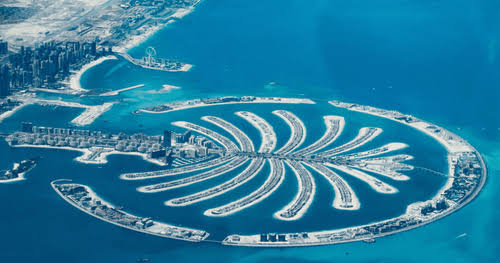
Palm Jumeirah is an extraordinary example of engineering and urban planning. Its distinctive shape has made it one of the most photographed places in the UAE, attracting visitors from around the world.
Here are 15 fascinating facts about Palm Jumeirah that may surprise you.
1. Palm Jumeirah Is a Man-Made Island
Palm Jumeirah was created by reclaiming land from the sea. Rather than being a naturally formed island, it was carefully designed and constructed to extend Dubai’s coastline into the Arabian Gulf.
The project became one of Dubai’s most ambitious waterfront developments. <Cite refs={[“turn248400search5″,”turn248400search10”]}/>
2. It Is Shaped Like a Date Palm
The island’s layout resembles a date palm tree, an important symbol in Middle Eastern culture. Its design includes a central trunk, palm-shaped branches known as fronds, and a crescent-shaped breakwater surrounding the outer area.
This distinctive shape is one of the main reasons Palm Jumeirah is recognised around the world. <Cite refs={[“turn248400search0″,”turn248400search6”]}/>
3. Construction Began in 2001
Development of Palm Jumeirah began in 2001 under Nakheel. The project involved extensive land reclamation, marine engineering and infrastructure development.
The first homes were handed over in 2006, helping transform the island into a residential and tourism destination. <Cite refs={[“turn248400search5″,”turn248400search6”]}/>
4. The Island Has 16 Main Fronds
Palm Jumeirah has 16 main fronds branching from its central trunk. These branches create the palm-tree outline and accommodate many private homes and waterfront properties.
The combination of the trunk, fronds and outer crescent gives the island its distinctive layout. <Cite refs={[“turn248400search0″,”turn248400search6”]}/>
5. Its Crescent Breakwater Is About 11 Kilometres Long
A crescent-shaped breakwater surrounds the outer part of Palm Jumeirah. It helps protect the island’s waterfront areas from the effects of waves.
The breakwater also provides a setting for major hotels and resorts. A scenic boardwalk runs along much of this coastal area. <Cite refs={[“turn248400search1″,”turn248400search11”]}/>
6. Palm Jumeirah Extends Around Five Kilometres Into the Gulf
The island reaches approximately five kilometres into the Arabian Gulf. Its scale is impressive, combining residential areas, hospitality facilities, beaches and leisure destinations in one development. <Cite refs={[“turn248400search3″,”turn248400search9”]}/>
7. Sand and Rock Played a Major Role in Its Construction
Building Palm Jumeirah required enormous quantities of sand and rock. Specialised dredging equipment was used to place sand and form the reclaimed land, while rock was used for the surrounding breakwater.
Satellite positioning and careful surveying helped construction teams achieve the island’s planned shape. <Cite refs={[“turn248400search3″,”turn248400search10”]}/>
8. Atlantis, The Palm Is One of Its Best-Known Landmarks
Atlantis, The Palm stands on the island’s outer crescent and is among Dubai’s most recognisable resort destinations.
The resort is known for its striking architecture, dining experiences and family attractions, including Aquaventure World and the Lost World Aquarium. <Cite refs={[“turn248400search0″,”turn248400search2”]}/>
9. Palm Jumeirah Has an Observation Deck Above the Island
The View at The Palm offers panoramic views of the island and Dubai’s surrounding coastline. Its main viewing platform is approximately 240 metres above ground.
From above, visitors can appreciate the palm-shaped design and understand how the trunk, fronds and crescent fit together. <Cite refs={[“turn248400search0″,”turn248400search5”]}/>
10. You Can Explore the Island by Monorail
The Palm Monorail connects key destinations along Palm Jumeirah, making it an alternative to travelling entirely by car or taxi.
Its route includes stops serving the trunk, shopping and leisure areas, and Aquaventure World. It is also a popular way to enjoy views of parts of the island along the journey. Check the official operator’s website for current services and fares before travelling. <Cite refs={[“turn248400search0″,”turn248400search5”]}/>
11. Palm West Beach Is Popular for Waterfront Walks
Palm West Beach is a well-known waterfront destination featuring a promenade, restaurants, cafés and beach clubs. Its promenade stretches for approximately 1.6 kilometres.
Visitors can enjoy a seaside walk, dine with coastal views or spend time at the beach. <Cite refs={[“turn248400search0″,”turn248400search2”]}/>
12. The Palm Jumeirah Boardwalk Stretches for 11 Kilometres
The Palm Jumeirah Boardwalk follows the outer coastline behind the island’s crescent. It is approximately 11 kilometres long and offers views of the Arabian Gulf.
The walkway is popular for strolling, jogging and enjoying the waterfront scenery. Food and refreshment stops are available at various points along the route. <Cite refs={[“turn248400search11”]}/>
13. The Island Is Home to Luxury Residences and Hotels
Palm Jumeirah is not just a tourist attraction. It is also a residential community with waterfront homes, apartments, hotels, restaurants and retail destinations.
Its three main areas—the trunk, fronds and crescent—serve different residential, leisure and hospitality purposes. <Cite refs={[“turn248400search1″,”turn248400search5”]}/>
14. You Can Enjoy Palm Jumeirah Without Staying at a Hotel
Visitors do not necessarily need to book a hotel room to experience the island. Depending on current access arrangements, they can explore public destinations such as the promenade, shopping areas and observation deck.
Some beaches, pools and resort facilities require a day pass, reservation or hotel booking, so check the rules of each venue before visiting. <Cite refs={[“turn248400search0″,”turn248400search2”]}/>
15. Palm Jumeirah Has Become a Symbol of Dubai’s Ambition
Palm Jumeirah demonstrates how engineering and urban planning can transform a coastline into a major residential and tourism destination.
Its distinctive shape, waterfront lifestyle and internationally recognised resorts have helped make it one of Dubai’s signature landmarks. It remains a popular subject for travel photography and a memorable destination for residents and visitors alike. <Cite refs={[“turn248400search5″,”turn248400search6”]}/>
Tips for Visiting Palm Jumeirah
If you are planning a visit, here are a few practical suggestions:
- See the island from above: Visit The View at The Palm for panoramic views of the palm-shaped layout.
- Explore the waterfront: Walk along Palm West Beach or the Palm Jumeirah Boardwalk.
- Plan family activities: Check attractions such as Aquaventure World and the Lost World Aquarium for current tickets and opening hours.
- Consider the monorail: It can be a convenient way to reach selected destinations on the island.
- Check access before travelling: Some beaches and resort facilities are private or require advance bookings.
For official visitor information, explore Visit Dubai’s Palm Jumeirah guide.
Final Thoughts
Palm Jumeirah is much more than a man-made island. Its palm-tree design, impressive breakwater, luxury resorts, waterfront promenades and observation deck make it one of the most fascinating places in Dubai.
Whether you are interested in engineering, architecture, travel or the history of Dubai, Palm Jumeirah offers plenty to discover. The next time you see the island from above, you will know more about the remarkable planning behind its famous shape.
For more interesting facts about famous landmarks, engineering achievements, history and destinations around the world, keep exploring DoYouKnowFacts.com.