

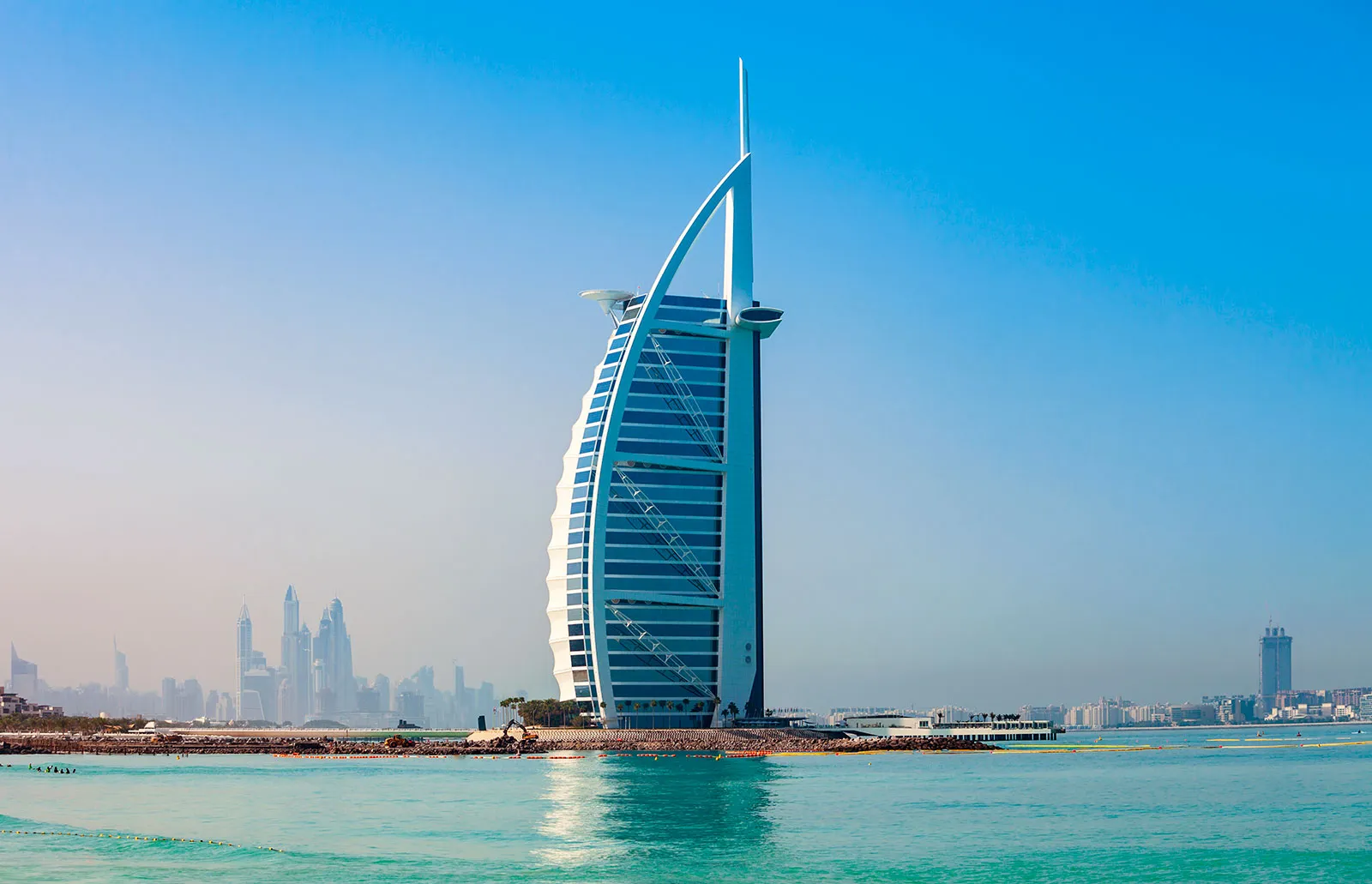
When people think of Dubai, two famous buildings often come to mind: Burj Khalifa and Burj Al Arab. While Burj Khalifa is famous for its extraordinary height, Burj Al Arab is known worldwide for its sail-shaped architecture, luxurious interiors and remarkable location beside the Arabian Gulf.
Standing 321 metres tall, Burj Al Arab is one of Dubai’s most recognisable landmarks. Since opening in 1999, it has become a symbol of the city’s ambition, creativity and luxury hospitality.
But how much do you really know about this famous hotel? Here are 15 fascinating facts about Burj Al Arab that may surprise you.
1. Burj Al Arab Opened in 1999
Burj Al Arab officially opened in 1999 and quickly became one of Dubai’s signature landmarks. Its arrival helped establish the city’s international reputation for ambitious architecture and luxury tourism.
More than a hotel, it became a defining part of Dubai’s modern skyline.
2. Its Design Was Inspired by a Sail
One of the most distinctive features of Burj Al Arab is its sail-shaped silhouette. British architect Tom Wright designed the building to resemble the sail of a traditional Arabian dhow, connecting its appearance to the region’s maritime heritage.
The curved exterior makes the hotel instantly recognisable in photographs and from the surrounding coastline.
3. The Hotel Stands 321 Metres Tall
Burj Al Arab rises approximately 321 metres above ground. Its impressive height makes it a prominent feature of Dubai’s coastal skyline.
Although it is not the tallest building in Dubai, its distinctive shape and position beside the sea give it a unique visual identity.
4. It Was Built on a Man-Made Island
Burj Al Arab stands on an artificial island approximately 280 metres offshore. Constructing a hotel on its own island required specialised engineering and careful foundation work.
More than 230 concrete piles were driven deep into the seabed to support the island’s foundations. A private curved causeway connects the island to the mainland.
5. The Building Has a Remarkable Atrium
Inside the hotel is a spectacular atrium rising more than 180 metres. The soaring interior creates a dramatic sense of space and is one of the building’s most memorable architectural features.
Its colourful finishes, decorative details and grand scale contribute to the hotel’s distinctive interior design.
6. Gold Leaf Adds to Its Luxurious Interiors
Burj Al Arab is famous for its lavish interiors. According to Jumeirah, approximately 1,790 square metres of 24-carat gold leaf were used across interior surfaces.
The hotel also features extensive marble finishes and elaborate decorative details, creating an atmosphere associated with exceptional luxury.
7. It Is Commonly Called a Seven-Star Hotel
Burj Al Arab is frequently described in popular media as a “seven-star hotel.” However, this is an informal expression used to describe its extraordinary luxury and service rather than an official hotel rating category.
The nickname has become closely associated with the property and its reputation for premium hospitality.
8. Every Guest Accommodation Is a Suite
Unlike many conventional hotels that offer a mixture of standard rooms and suites, Burj Al Arab is an all-suite property.
Its accommodation is designed around spacious layouts and personalised hospitality. The hotel is particularly known for its dedicated butler service, which is provided for every suite.
9. Its Helipad Has Hosted Extraordinary Events
The hotel’s helipad is one of its most recognisable features. Although designed for helicopter access, it has also hosted special events and remarkable sporting spectacles.
In 2005, tennis legends Roger Federer and Andre Agassi played a friendly tennis match on the helipad. Other headline-making events have included motorsport stunts and high-profile performances.
10. The Hotel Reflects Dubai’s Maritime Heritage
Dubai’s history is closely connected with the sea, including fishing, trading and pearl diving. The sail-inspired design of Burj Al Arab reflects this maritime heritage.
Its architecture creates a visual link between the region’s traditional relationship with the sea and its modern identity as an international tourism destination.
11. It Has Become a Global Photography Landmark
The hotel’s unusual silhouette makes it one of Dubai’s most photographed buildings. Visitors often photograph it from nearby beaches, coastal roads and waterfront locations.
Its illuminated exterior is particularly striking after sunset, when it forms a distinctive feature of the Dubai skyline.
12. Burj Al Arab Is Located Near Other Famous Attractions
Burj Al Arab is situated in the Jumeirah area of Dubai, close to several popular visitor destinations.
Nearby attractions include Jumeirah Beach, Madinat Jumeirah and other coastal leisure areas. These locations provide opportunities to enjoy views of the hotel without necessarily staying inside it.
13. The Hotel Is Known for Personalised Hospitality
Burj Al Arab built its reputation around highly personalised service. Its hospitality experience includes dedicated butlers, luxury transport options and distinctive guest welcome rituals.
The hotel’s approach reflects a broader tradition of Arabian hospitality, where welcoming guests and making them feel comfortable are important cultural values.
14. Its Architecture Required Innovative Engineering
Building a large structure on an artificial island presented considerable technical challenges. Engineers had to consider the seabed, foundations, coastal conditions and the forces created by strong winds.
The building’s distinctive shape was therefore not only an architectural statement but also part of a carefully engineered structure.
15. Burj Al Arab Continues to Be an Icon of Dubai
More than 25 years after its opening, Burj Al Arab remains a major symbol of Dubai. Its distinctive architecture, luxury hospitality and memorable location have helped it become recognised around the world.
The hotel has also been associated with marine conservation through the Dubai Turtle Rehabilitation Project, which has rescued, rehabilitated and released sea turtles back into the Arabian Gulf.
Its legacy extends beyond luxury accommodation, representing the imagination and ambition behind one of Dubai’s most famous landmarks.
Can You Visit Burj Al Arab?
Burj Al Arab is a luxury hotel, and access to its interior depends on the hotel’s visitor arrangements. Inside Burj Al Arab also offers guided experiences that let visitors explore selected areas and learn about the building’s history.
Important: Jumeirah announced a phased restoration programme in April 2026, and Visit Dubai has reported an 18-month restoration period. Check the official Burj Al Arab website or Visit Dubai for the latest access arrangements before planning a visit.
Final Thoughts
Burj Al Arab is much more than a luxurious hotel. Its sail-inspired design, artificial island, extraordinary atrium and famous helipad make it one of the most distinctive buildings in the world.
Whether you are interested in architecture, engineering, travel or Dubai’s history, Burj Al Arab offers plenty of fascinating details to explore. The next time you see its sail-shaped silhouette along the coast, you will know more about the remarkable story behind this iconic landmark.
For more fascinating facts about famous buildings, world landmarks, science, history and travel, keep exploring DoYouKnowFacts.com.